Legend: The Graphic Novel first Published 1993.
For fans of heroic fantasy, few novels have achieved the legendary status of David Gemmell’s Legend. First published in 1984, the novel introduced readers to Druss the Legend, the doomed fortress of Dros Delnoch, and one of the greatest last-stand stories ever written. Nearly a decade later, the world of the Drenai was brought to life in a new medium with the release of David Gemmell’s Legend: A Graphic Novel, published in 1993. Written by fantasy author Stan Nicholls and illustrated by Fangorn (Chris Baker), the graphic novel offers a visual interpretation of Gemmell’s classic tale.
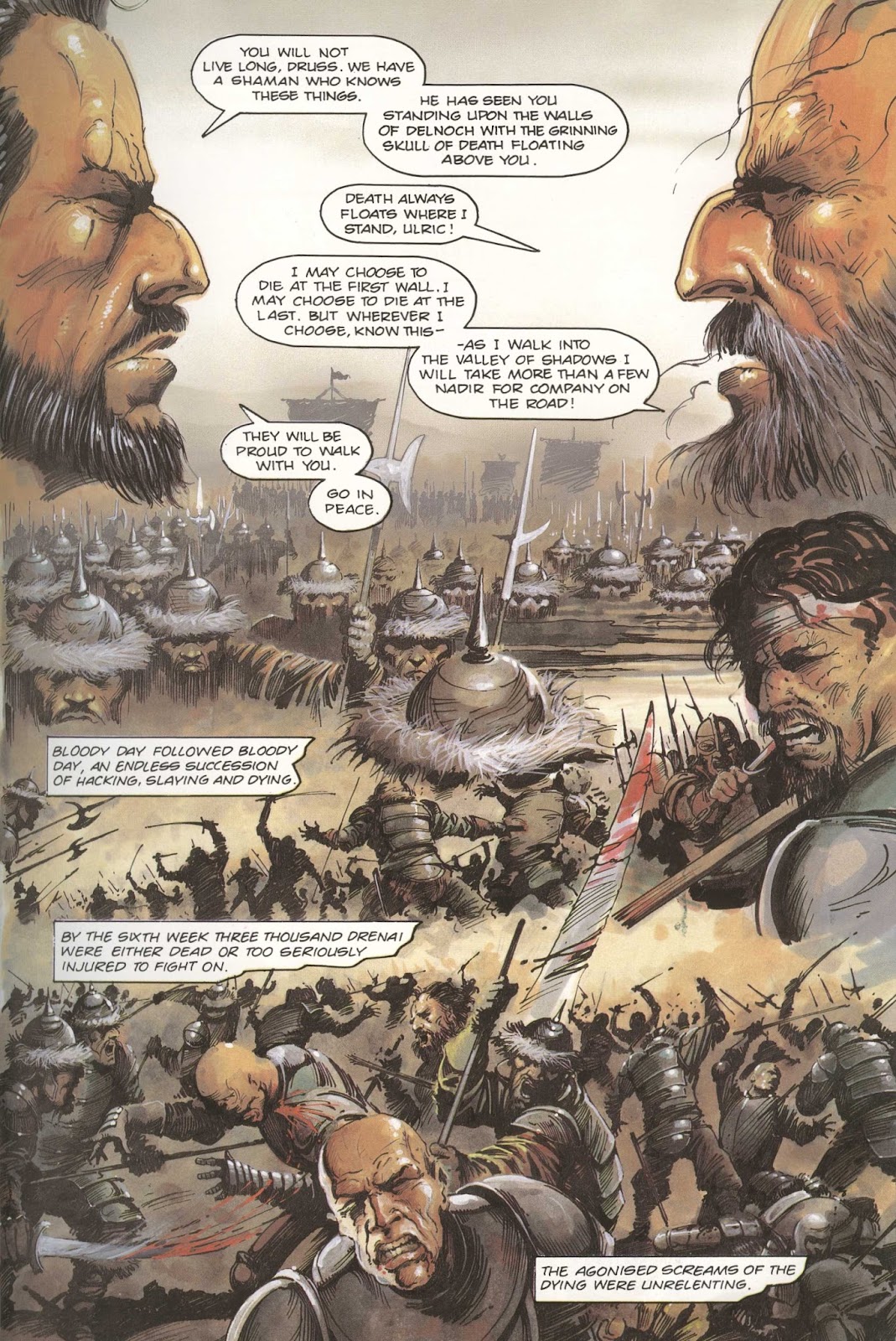
Condensing a sweeping fantasy novel into fewer than one hundred pages is no easy task. The graphic novel focuses on the central events of the story: the siege of the mighty fortress of Dros Delnoch and the desperate defence mounted by the Drenai against Ulric’s vast Nadir horde. At the heart of the story stands Druss, the ageing warrior whose name has become synonymous with courage, sacrifice, and honour. Through vivid artwork and dynamic action sequences, the graphic novel captures many of the iconic moments that have made Legend a beloved classic among fantasy readers.
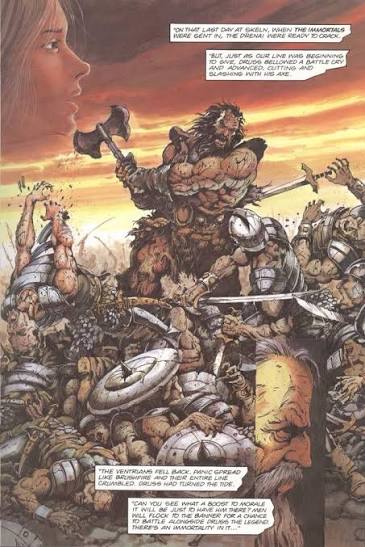
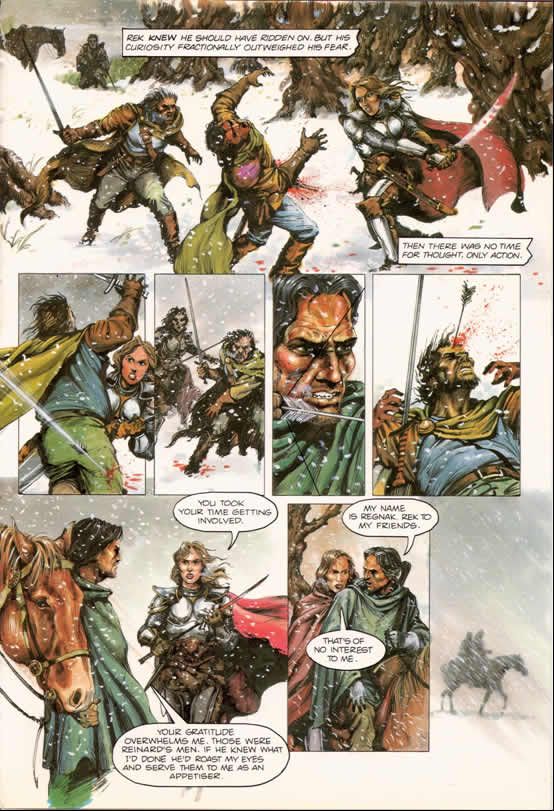
One of the greatest attractions of the adaptation is the opportunity to see Gemmell’s world realised visually. Readers who spent years imagining Druss, Rek, Virae, and the towering walls of Dros Delnoch can finally see an artist’s interpretation of these legendary characters and locations. The full-colour artwork successfully conveys the grim atmosphere of a kingdom facing annihilation and brings many memorable battle scenes to life.
However, the transition from novel to graphic novel inevitably requires compromise. While the adaptation faithfully follows the broad story, much of the depth that made the original novel so compelling is necessarily condensed. Character development, particularly Rek’s journey from self-doubt to heroism, receives less space, and some of the quieter moments that gave the novel its emotional resonance have been reduced or omitted. The result is a faster-paced retelling that focuses on action and spectacle rather than the rich exploration of courage, loyalty, redemption, and mortality that characterises Gemmell’s writing.
For this reason, most long-time Gemmell readers regard the graphic novel as a companion piece rather than a replacement for the original work. It serves as an enjoyable visual addition to the Drenai Saga and a fascinating collectible for dedicated fans, but the novel itself remains the definitive way to experience the story. Readers new to the world of Druss are generally advised to start with the original book before exploring the adaptation.
Today, David Gemmell’s Legend: A Graphic Novel has become something of a collector’s item. Having been out of print for many years, copies can be difficult to find and often command surprisingly high prices on the second-hand market. Its rarity, combined with its status as one of the few official visual adaptations of Gemmell’s work, has made it a sought-after piece of fantasy publishing history.
For devoted Gemmell enthusiasts, the graphic novel remains a fascinating artefact from the golden age of fantasy publishing. It offers a unique opportunity to see one of the genre’s most celebrated stories through a different lens while providing a glimpse of how artists and writers interpreted Gemmell’s vision. Yet, for all its strengths, it ultimately reinforces the enduring power of the original novel. More than forty years after its publication, Legend continues to stand as David Gemmell’s masterpiece, and the graphic novel serves as a worthy tribute to a story that has inspired generations of fantasy readers.
Some of the panels from Legend: The Graphic Novel.