Wolf In Shadow: The Graphic Novel first Published 1994.
While Legend introduced readers to the heroic age of the Drenai, Wolf in Shadow took David Gemmell in an entirely different direction. First published as a novel in 1987, it transported readers into a harsh post-apocalyptic future where civilisation had collapsed and the remnants of humanity struggled to survive among ruined cities, lawless territories, and fading myths. In 1994, this unique story was adapted into David Gemmell’s Wolf in Shadow: The Graphic Novel, bringing the journey of Jon Shannow to life through the artwork of Fangorn and an adaptation by fantasy author Stan Nicholls.
Unlike many fantasy heroes, Jon Shannow is not driven by glory, power, or conquest. Known throughout the wastelands as the “Jerusalem Man”, he wanders a shattered world searching for the legendary city of Jerusalem, believing it to be a place of truth, purpose, and redemption. Along the way he encounters raiders, fanatics, warlords, settlers, and ordinary people struggling to survive in a world that has lost its moral compass. This blend of western, fantasy, and post-apocalyptic fiction helped make Wolf in Shadow one of the most distinctive novels in Gemmell’s catalogue.
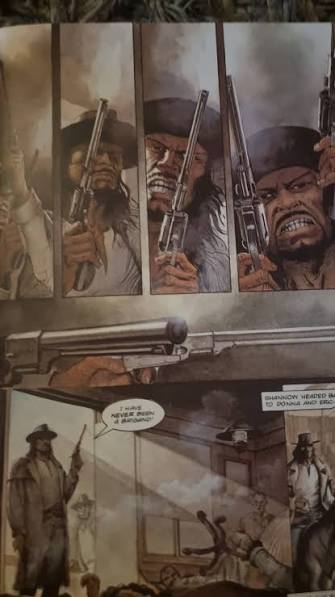
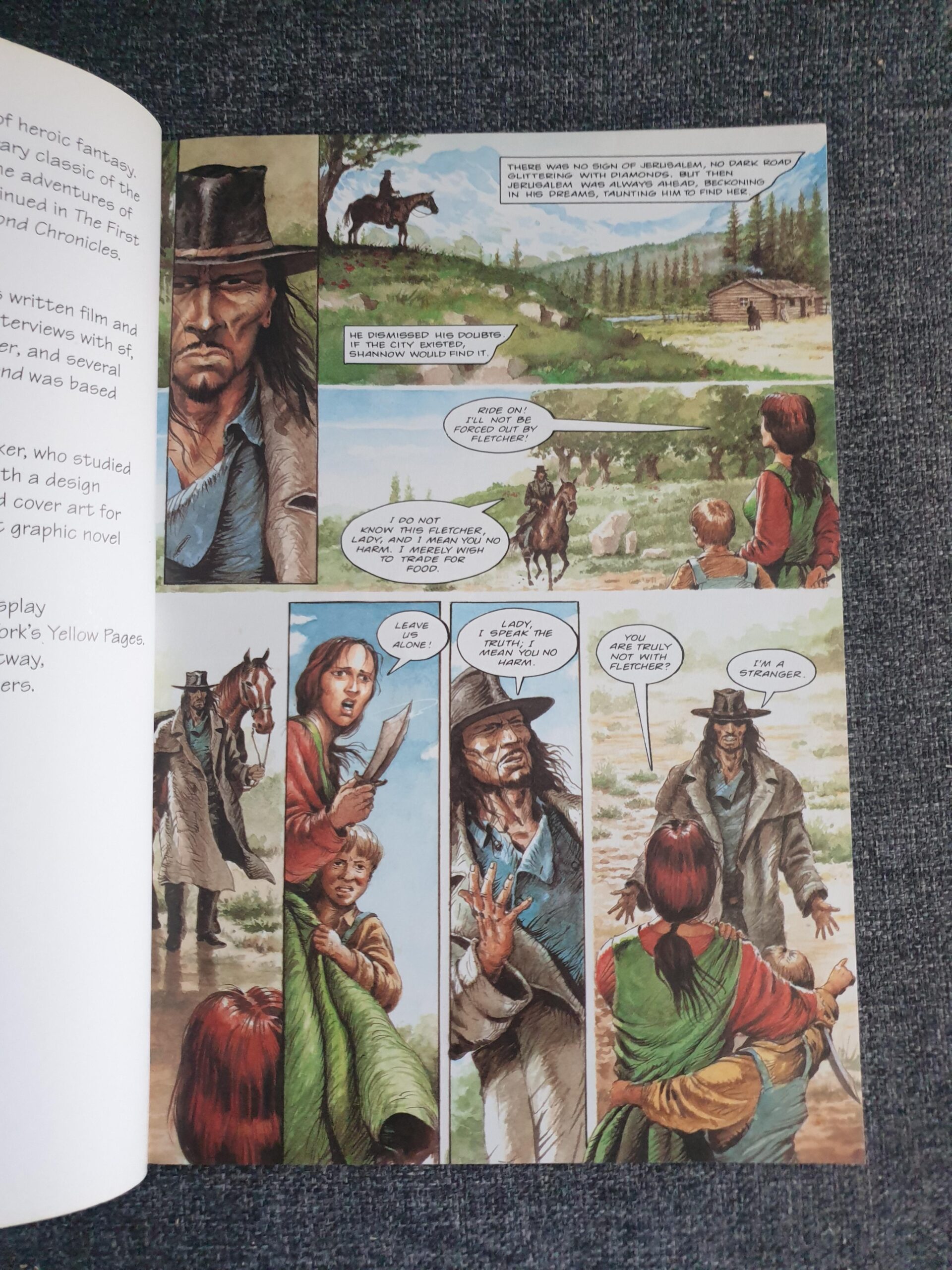
The graphic novel embraces the bleak atmosphere of the original story. Vast deserts, ruined landscapes, isolated settlements, and violent frontier towns are rendered in dramatic detail, helping to establish the sense of loneliness that defines Shannow’s journey. Where the Drenai novels often focus on armies and sieges, Wolf in Shadow is much more personal. The story follows a solitary man walking through the remnants of a fallen world, guided by faith and an unwavering belief that something better still exists beyond the horizon.
One of the strengths of the adaptation is its portrayal of Jon Shannow himself. Gemmell’s readers have long regarded Shannow as one of his most complex protagonists. Armed with powerful revolvers and guided by deeply held convictions, he is both a warrior and a pilgrim. The graphic novel captures this duality well, presenting him as a formidable figure while never losing sight of the spiritual quest that drives him forward. His determination, inner strength, and refusal to yield to despair remain central to the story.
As with the Legend graphic novel, the challenge lies in condensing a substantial novel into fewer than one hundred pages. The adaptation naturally focuses on the major events and key confrontations, resulting in a faster-paced narrative than the original book. Some of the deeper philosophical themes, particularly Shannow’s reflections on faith, destiny, and redemption, have less room to develop than they do in the novel. Readers familiar with Gemmell’s prose may therefore find the original work offers a richer and more nuanced experience.
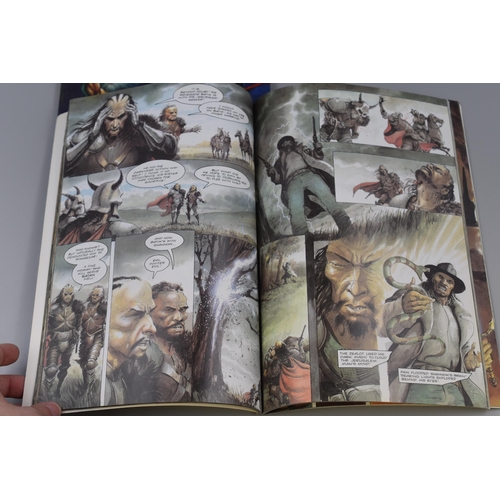
Nevertheless, the adaptation succeeds in introducing newcomers to the world of the Sipstrassi Saga. The graphic format highlights the dramatic action and striking visual elements that have always been part of the story, from gunfights and supernatural encounters to the haunting landscapes of the post-Fall world. It also provides a fascinating glimpse into how artists interpreted one of Gemmell’s most imaginative settings during the 1990s.
More than thirty years after its publication, the graphic novel continues to stand as an intriguing companion to the original novel rather than a substitute for it. It captures the atmosphere, action, and visual appeal of Shannow’s world while encouraging readers to seek out the source material for the full experience. For many fans, that remains the greatest strength of the adaptation: it serves as a doorway back to one of David Gemmell’s finest creations, reminding us why the journey of the Jerusalem Man still resonates with readers today.
Some of the panels from Wolf in Shadow: The Graphic Novel.